Conversion Rate Optimisation (CRO)
Stuck at the conversion rate it launched with
A site tends to convert at whatever rate it happened to launch with. Traffic arrives, some of it enquires, and nobody can say with confidence why the number is what it is or what would move it. So the site stays as it launched, and the number stays with it.
Conversion rate optimisation is the patient way out of that: find where people are lost, change one thing, measure it, and go again. The gains are small on their own. Compounded over months, they add up.
What is conversion rate optimisation (CRO)?
Conversion rate optimisation is the ongoing work of finding where a site loses people and fixing it, one measured change at a time. On a B2B site that usually means the moments between arriving and enquiring: the headline, the proof, the form, the order things appear in. It's a process rather than a redesign, which is why it works.


How we work
We find where people drop off using session recordings and funnel data rather than instinct, change one thing to address it, and measure whether it moved. Then we do it again. The discipline is in the loop itself. Every change has to earn its keep by moving a number, not by making the page look more modern, and the log of what worked becomes knowledge about your buyers that outlasts any single fix.
Case study: CloudNC
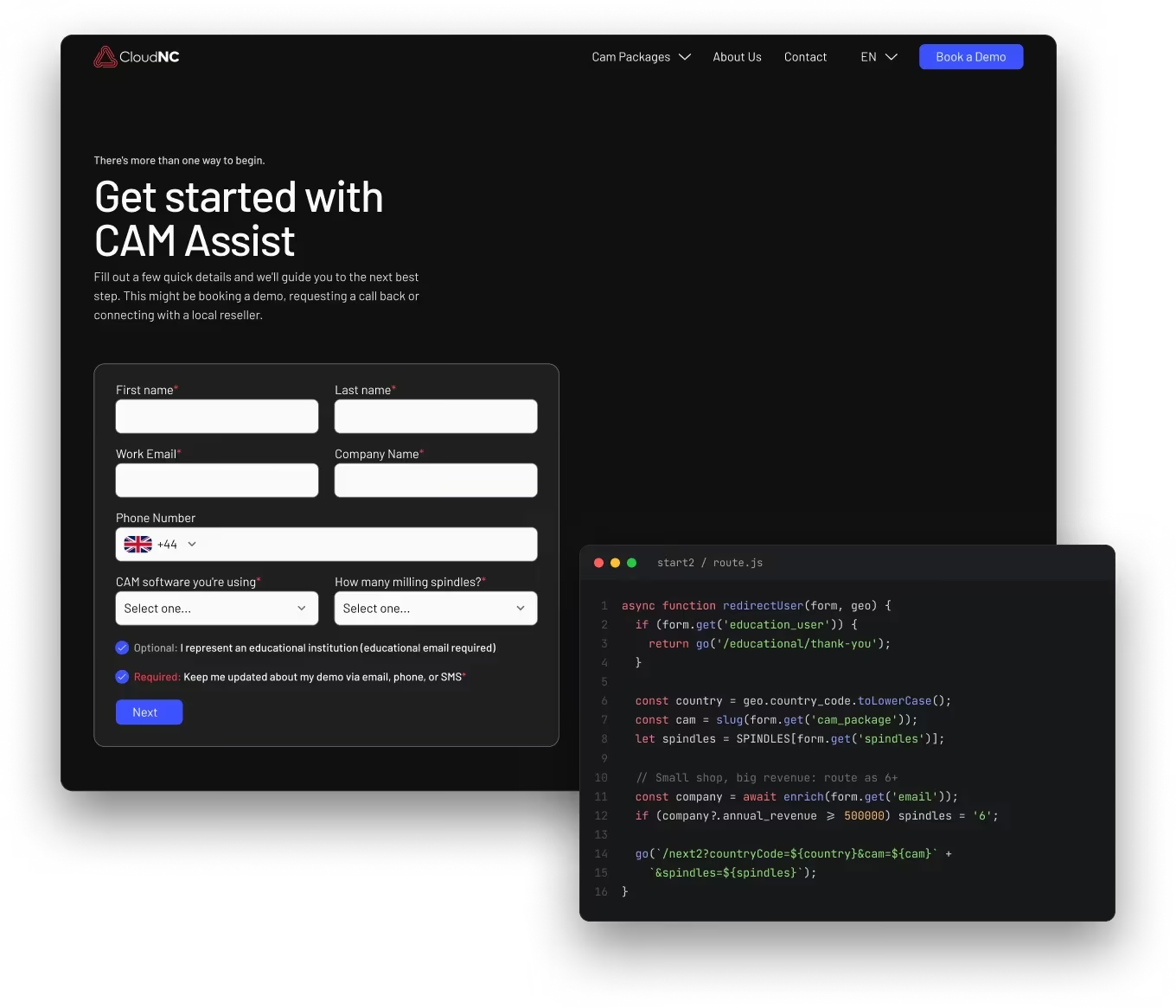
CloudNC's conversion problem lived after the form, not before it. Smarter routing and market-specific next steps, tailored to each user's context, increased the number of users progressing beyond form submission by 21%.

- Conversion rate uplift
- 21%
- New markets
- 60+
What's included
CRO is part of the Optimisation retainer, from £1,500 a month. It covers a monthly funnel and session review, a prioritised change list, implementation on your site, A/B testing where traffic allows, and a report on what moved and what's next. If analytics and tracking aren't in place yet, we set those up properly first.
Outcomes
The aim is a conversion rate that climbs over months rather than lurching after a redesign, decisions backed by your own data, and a site that keeps pace well enough to put off the next rebuild.