
- Client
- ForestForest
- Industry
- Shared e-bikesShared e-bikes
- Latest round
- £40m Series B£40m Series B
- Solutions
- Live site
- Visit siteVisit site
- Desktop performance score
- 95
- Largest content paint
- 1.1s
- Best practices score
- 96
Overview
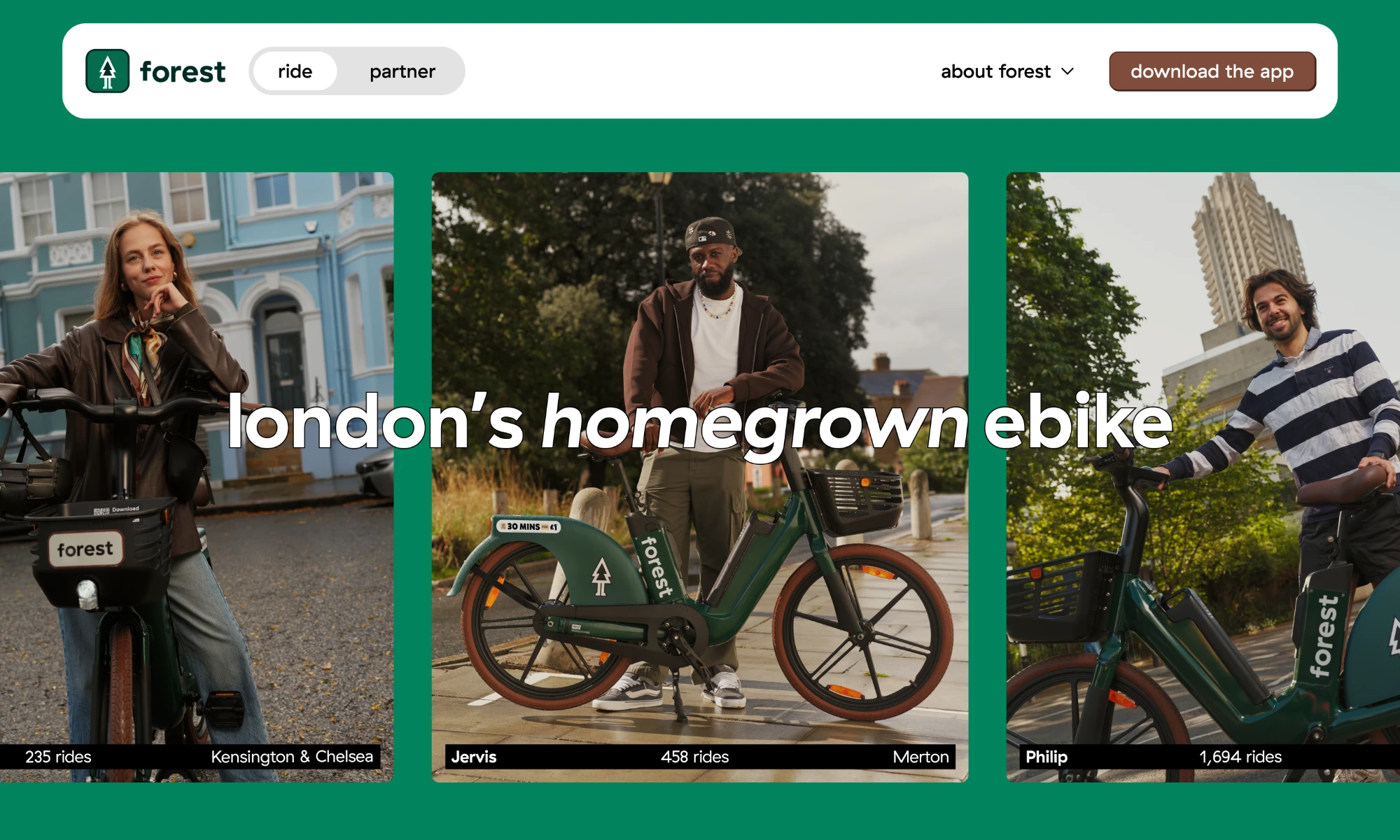
Forest is one of London's fastest-growing micromobility companies, with 1.5 million riders and a £40 million Series B behind it. At that scale it was running two separate web properties on two different setups: the consumer site forest.me, and partnerships.forest.me, the B2B site Shrink had built earlier in the year on a modular Webflow framework. We brought both onto that one framework, so Forest now runs a single unified site their own team can update and publish from.
The Problem
Forest's web presence had grown alongside the company: two separate sites on two different setups. Each ran independently, with its own templates, its own content and its own way of being updated.
Running two sites in parallel meant duplicated effort and a brand that looked and behaved differently across the two. There was no shared design system and no shared CMS, so a change made in one place had to be remade in the other. For a company moving at Forest's pace, the split was costing more in time and consistency than it was worth.
The Discovery
The B2B build had already shown what the framework could do. partnerships.forest.me was quick to update, modular by design, and straightforward enough for Forest's team to manage themselves.
With the framework proven on the partnerships side, the next step was clear: bring the consumer site onto the same foundation and run both as one. One framework, one design system, one CMS, in place of two setups maintained separately.
The Solution
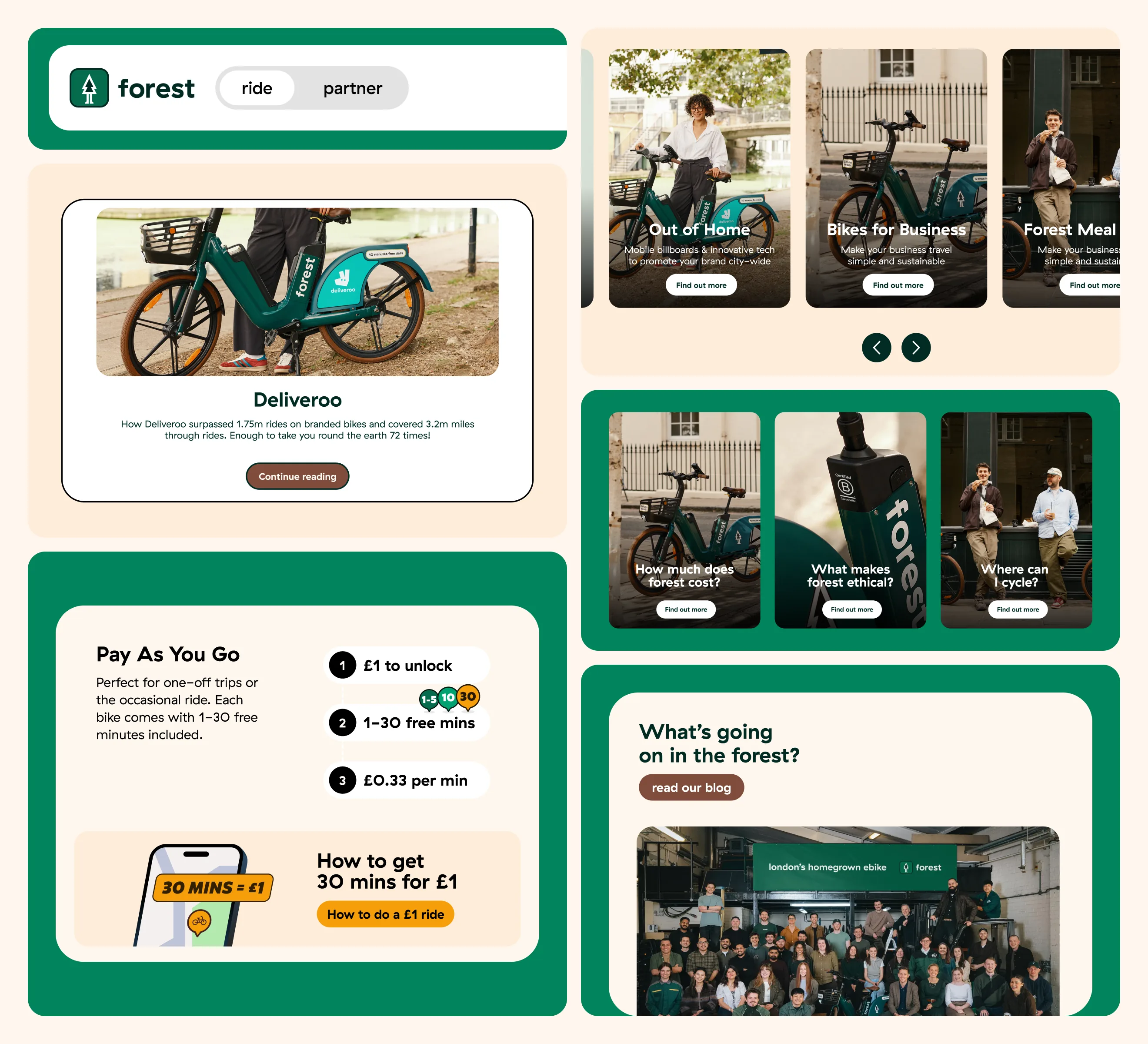
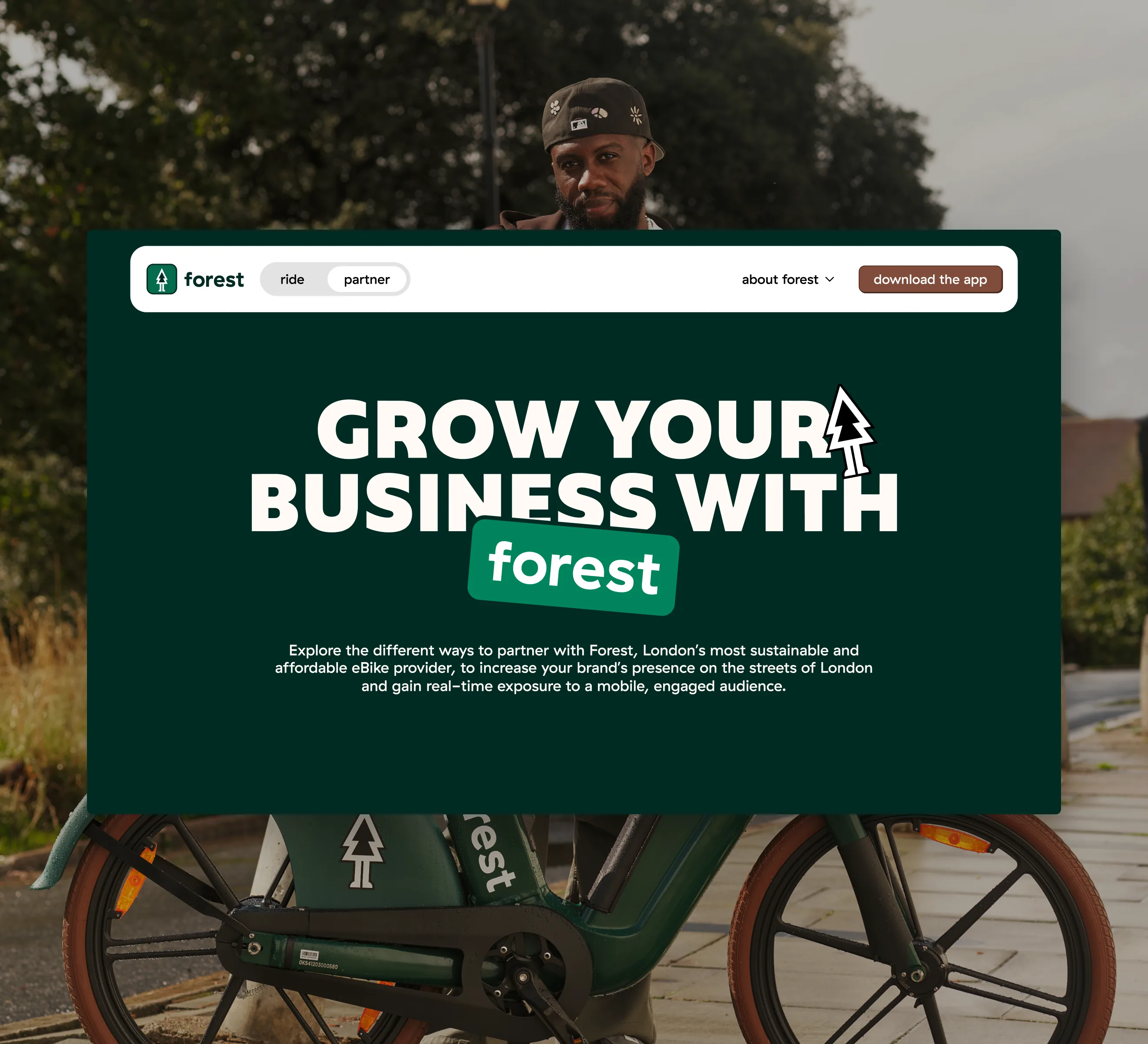
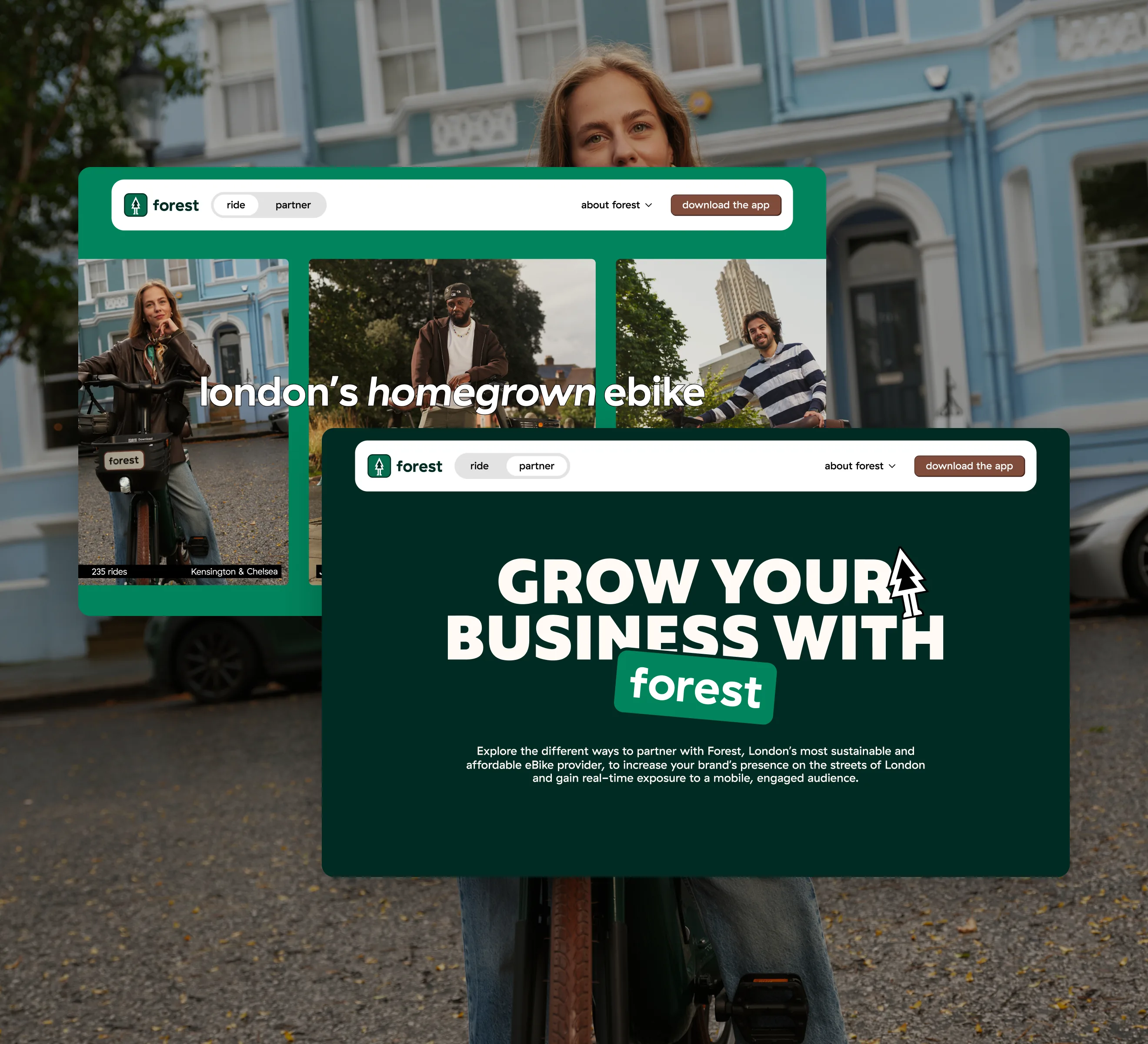
We brought forest.me onto the Webflow framework already powering the partnerships site, then merged the two into one site, one codebase and one CMS. A single design system now spans consumer and B2B, with one nav that toggles between the two audiences.
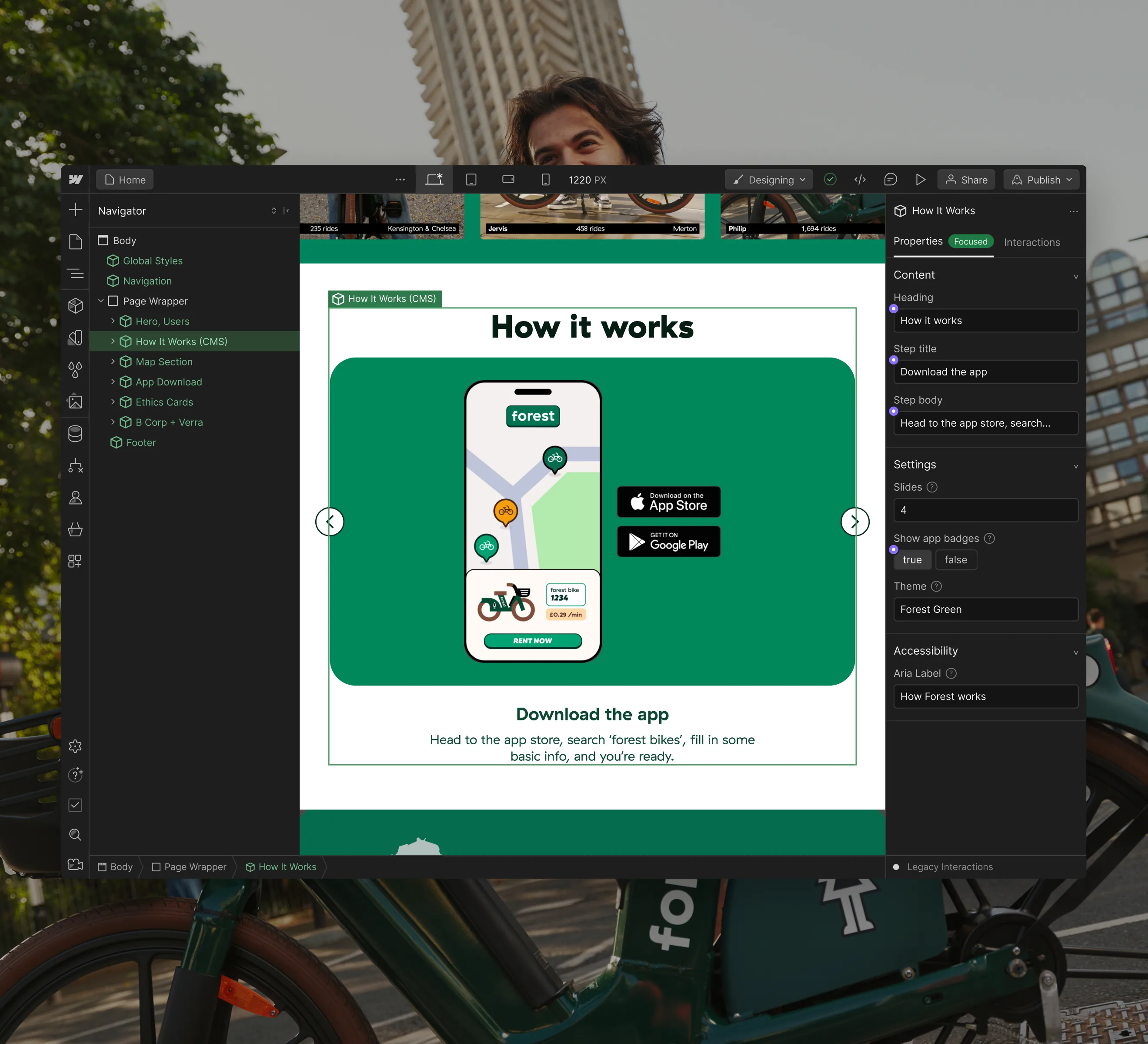
The CMS is built on five interlinked collections (blogs, case studies, customers, products and statistics) rather than static pages, so Forest's editorial team publishes without engineering involvement and every page is assembled from shared components.
Structured data went from a single generic tag to a full JSON-LD layer: Organization and WebSite site-wide, Article on posts, Service on offerings, BreadcrumbList throughout. Alt text is a required field on every image collection, so accessibility coverage holds as content grows.
The front end runs on a custom esbuild bundle of around 36 KB (GSAP, Lenis, Barba.js, no jQuery), with responsive images via srcset and HubSpot forms preloaded on first page load. Every URL from both sites was mapped to its new destination so rankings and inbound links carried over.
The Results
The unified site launched on a single Webflow framework. On desktop it scores 95 for performance, with the largest content painting in 1.1 seconds and first paint in under a second, and 96 on best practices.
Beyond the scores: two web properties are now one site, one codebase and one CMS. A full schema layer makes the site legible to search engines and answer engines. Alt text is enforced in the workflow. And Forest's team ships case studies, posts and customer stories themselves.
Key Takeaway
A site should keep pace with the business behind it. Bringing both properties onto one framework gives Forest a single system to maintain rather than two, a team that ships updates without waiting on developers, and a structure built for the search visibility their stage demands. For any company that has outgrown the setup it launched with, the lesson is the same: one maintainable framework means less to manage, faster publishing, and a foundation that holds as the business grows.