- Client
- AdfinAdfin
- Industry
- Business paymentsBusiness payments
- Funding
- $30m$30m
- Latest round
- $18m Series A$18m Series A
- Solutions
- Live site
- Visit siteVisit site
- To launch
- 8 weeks
- Unique page designs
- ~30
- AI search visibility
- 4x
Overview
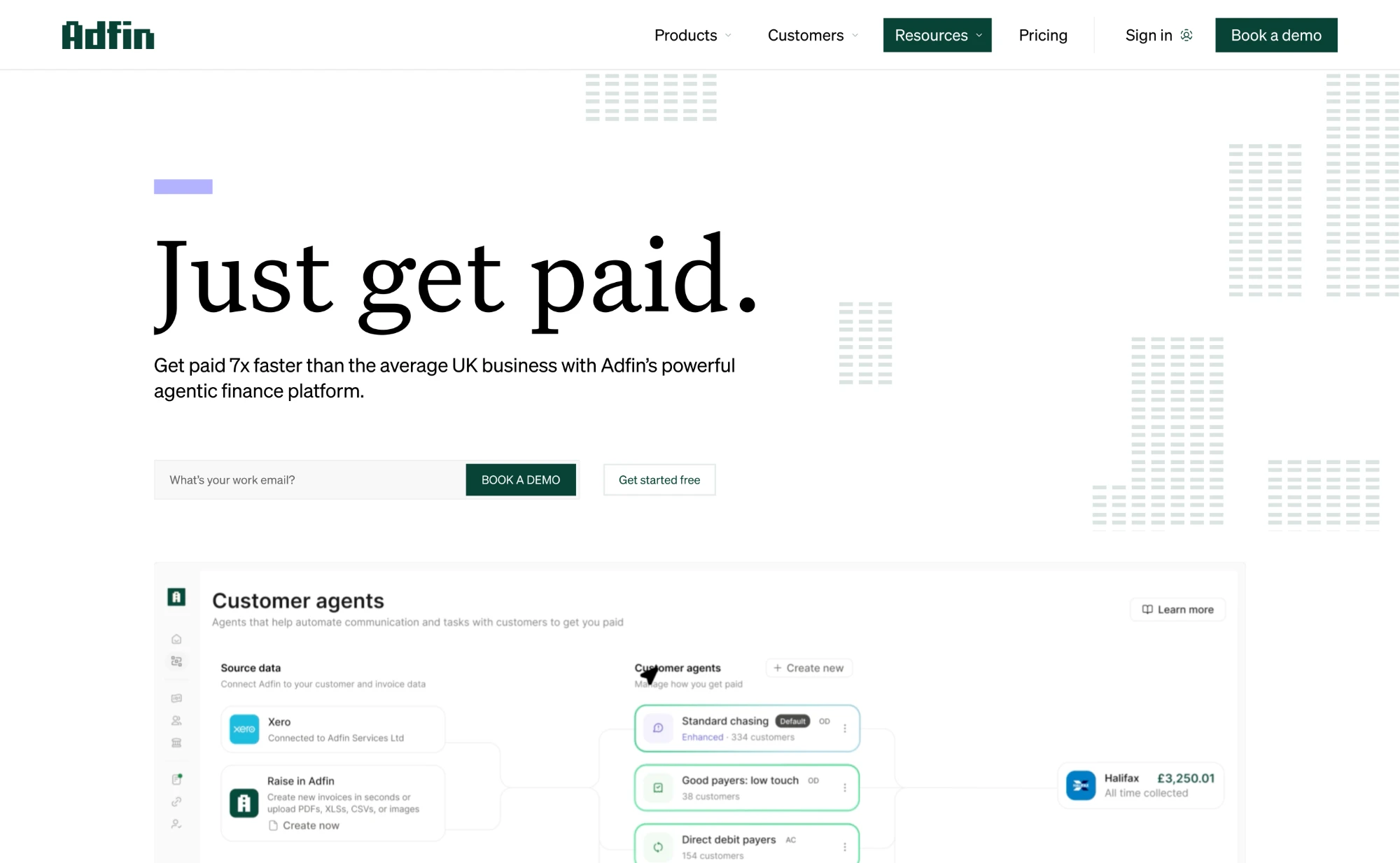
Adfin is a London B2B fintech that combines invoice payments and credit control so businesses get paid on time. By 2026 it had over 2,500 customers, an $18m Series A led by Index Ventures and a new brand by Pentagram. The marketing team already ran adfin.com in Webflow, but the build underneath had stopped keeping up. Over the summer of 2026 Shrink rebuilt it from the foundation up: a component-first Webflow site with a CMS designed for the team that runs it.
The Problem
Adfin's site had grown the way most in-house Webflow sites do, one page at a time. The team ran it themselves, and over time the build became the bottleneck. It was a patchwork of Relume and Client-First components, with no real CMS architecture and classes like div-block-259 throughout. Every new page meant working around what was already there. With no foundation to build on, the site had reached its ceiling.
Then the company changed shape. An $18m Series A, a new brand by Pentagram and more than 2,500 customers. The product story had moved to payments and credit control, powerful independently and stronger together, expanding toward a full cash flow hub. Adfin needed a site built for where it's heading.
The Discovery
We started with the existing build: what was worth keeping and what had to go. Everything structural had to go. What had to survive was the site's search footprint. Adfin had more than 5,600 live URLs, over 5,000 of them referral pages, and every one was mapped through a set of 45 redirect rules so nothing the site had earned in search was lost.
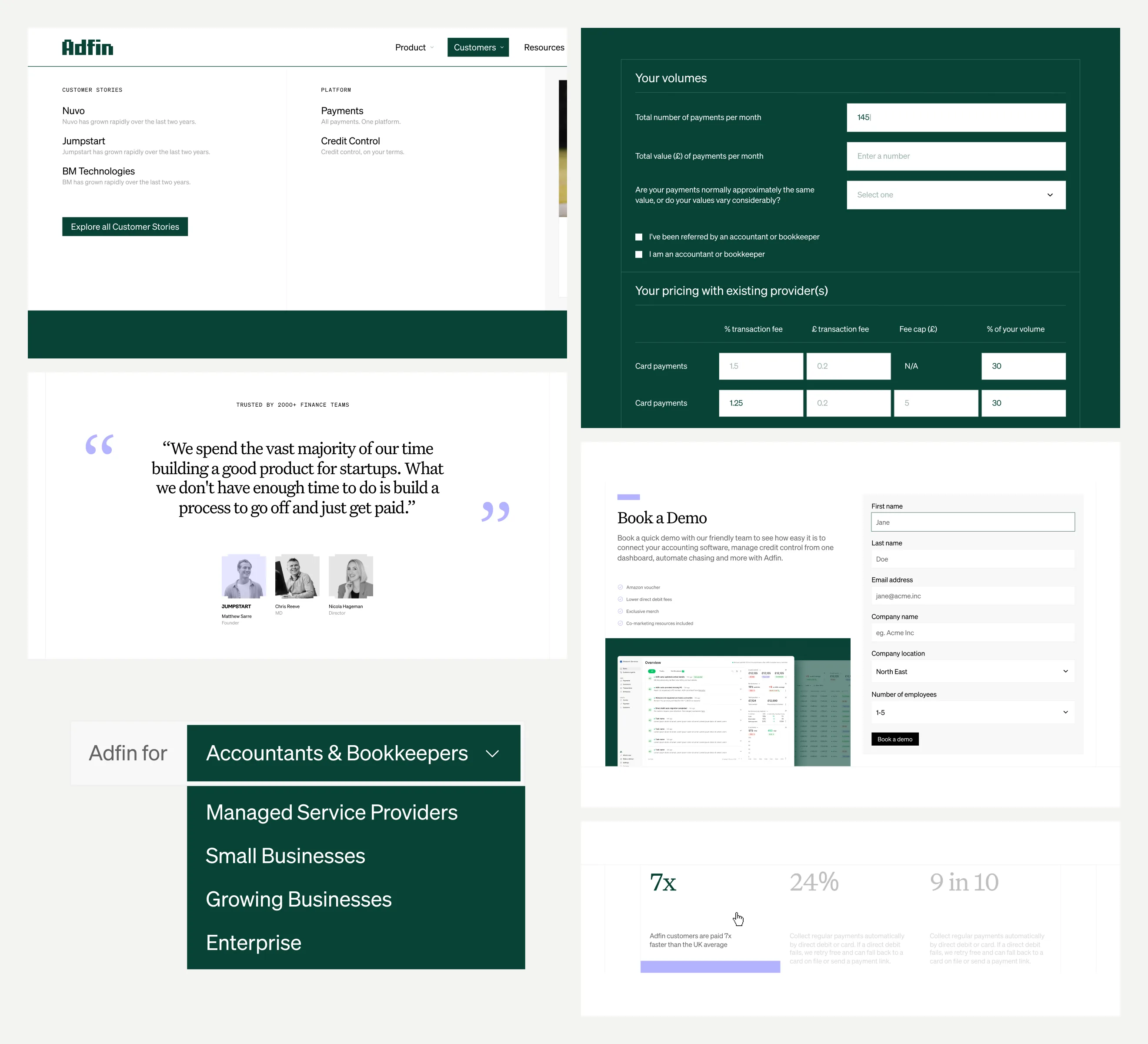
The audit also covered the moving parts: a pricing calculator, a Book a Demo flow with RevenueHero scheduling, HubSpot forms and a full tracking stack. Each needed a proper home in the new build.
The Solution
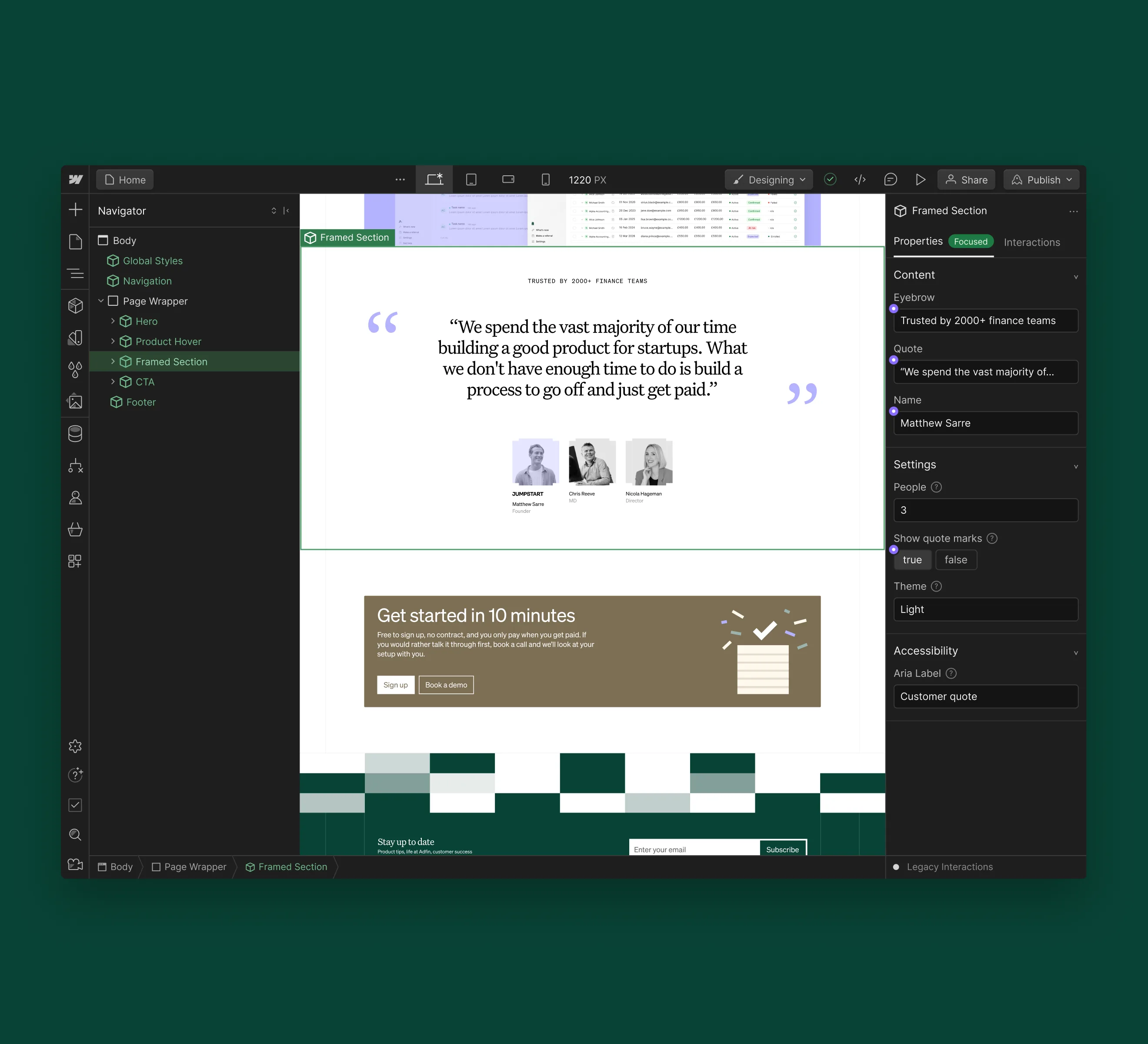
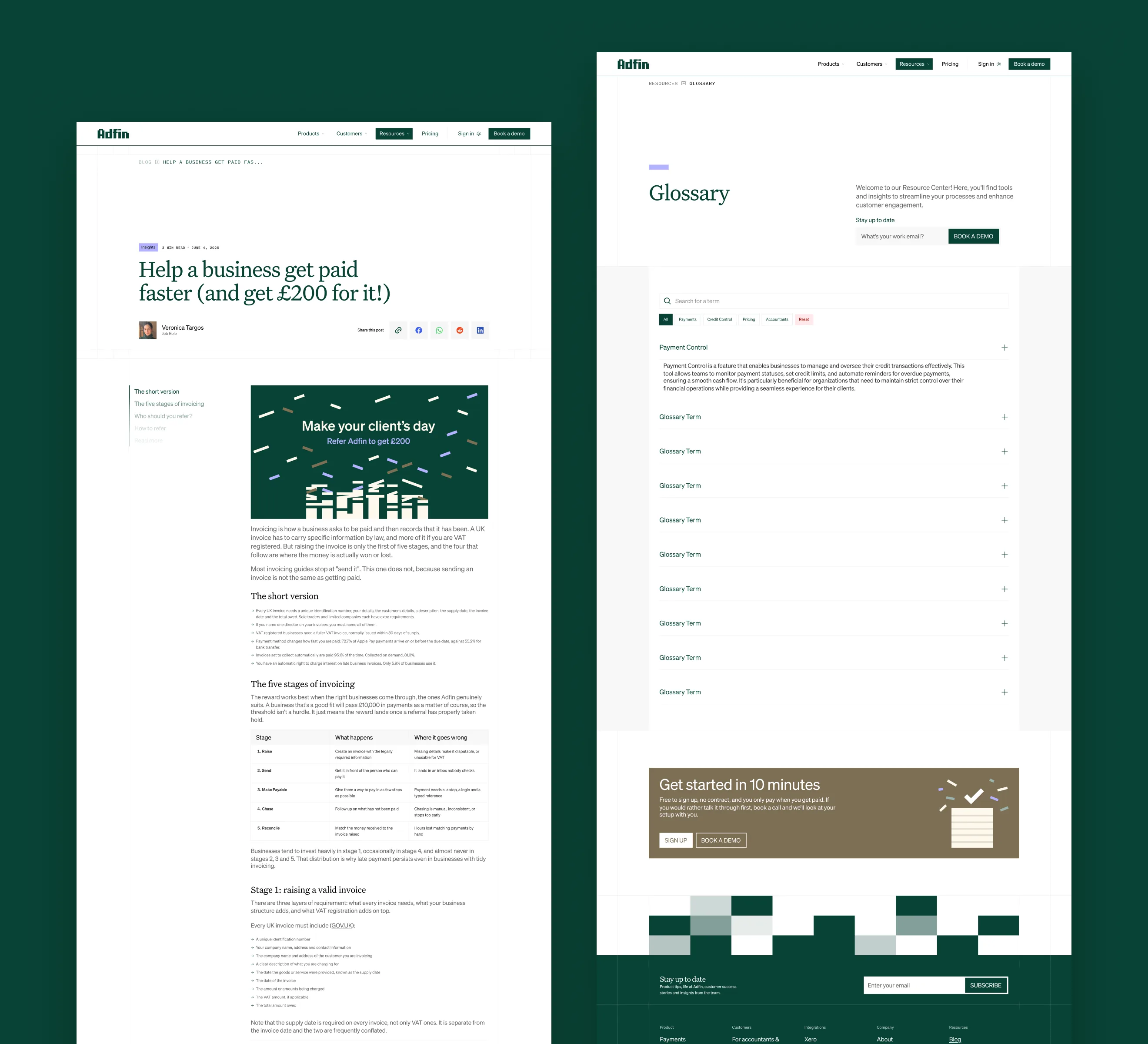
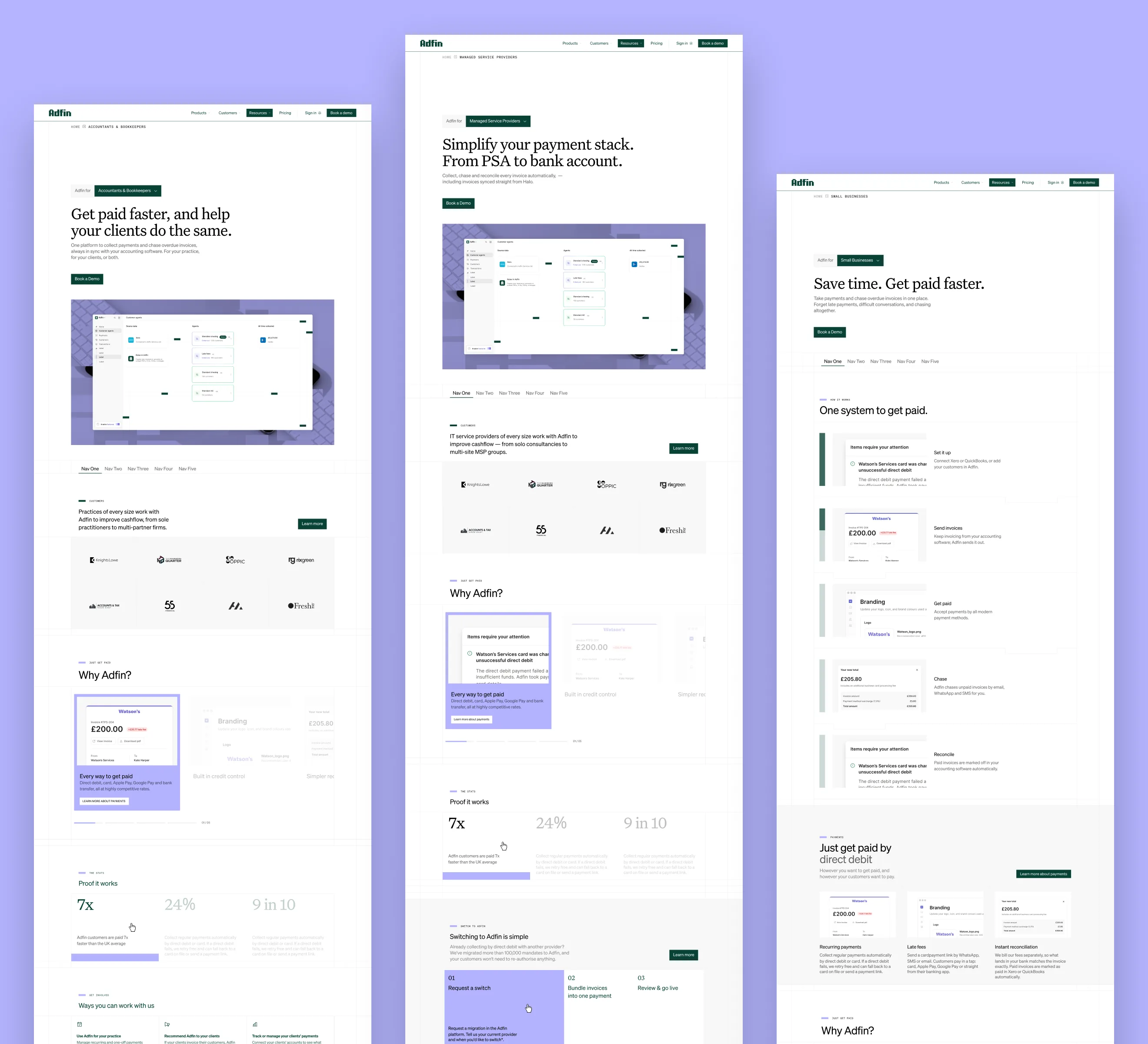
Component first. A style guide, variables and a component set with props, named so anyone on the team can read them. Around thirty unique page designs plus CMS templates, all assembled from the same parts. The design direction came from the new Pentagram brand: an animated block system derived from the logo's forms, a restrained palette, and real product UI in the hero.
Code components where Webflow stops. The pricing calculator, the Book a Demo form and the embeds for Adfin's product animations are React code components in Adfin's own Webflow library. The team places and edits them like any other element.
AI ready. Every CMS collection carries an SEO and AEO field group, including an AI Summary written for answer engines. Templates output structured data, FAQs publish their own schema from the CMS, and launch day included the LLM setup alongside redirects and on-page SEO.
Schema locked in. Every collection is grouped, and every field has help text, so new pages follow the structure without anyone having to remember it.
The Results
Adfin launched the new site the week of 7 September 2026. Since launch the marketing team has built seven new vertical pages on their own, without Shrink's involvement.
The AI groundwork showed up fast. Between late September and mid October, HubSpot AEO measured Adfin's brand visibility in AI answers rising from 5.33% to 21.62%. ChatGPT went from 8% to 26.22%, and Perplexity from 0% to 19.55%.
“We'd taken our old Webflow site as far as it could go. We needed a site that matched our Series A and our new brand, and Shrink rebuilt it on a foundation built for where Adfin is going. Since launch we've added seven new vertical pages ourselves, and we build on it every week. What surprised us was how fast it showed up in AI search. Within weeks we were appearing in four times as many AI answers.”

Key Takeaway
Running your own Webflow site only works if the build underneath can take the growth. Adfin's team had the skills; the site lacked a foundation. A raise and a rebrand made it the right moment to start again, with structure designed for the team that runs it.