Content Strategy
Copy written to fill a layout reads like it
On most projects the sitemap gets agreed early and the words arrive late. Somewhere in between, copy gets written to fill the layouts rather than to move the reader, and it shows: pages that say something, without anyone having decided what they were for.
Content strategy is the step in between. It decides what each page needs to say, in what order, with what proof, before anyone writes a headline.
What is content strategy for a website?
Content strategy is the plan for what a website says. It decides which claims belong on which page, what evidence backs each one, and what a buyer needs to read first. It sits between positioning, what you stand for, and copywriting, the actual words. It's also the step most website projects skip.
How we work
For each page we write down who it's for, the belief they need to reach, and the sequence of things they need to see to get there. Then we list the proof each claim depends on: the numbers, the names, the examples. Gaps in the proof show up early this way, while there's still time to gather a customer quote or dig out a result, rather than at the copy deadline.
Case study: Adfin
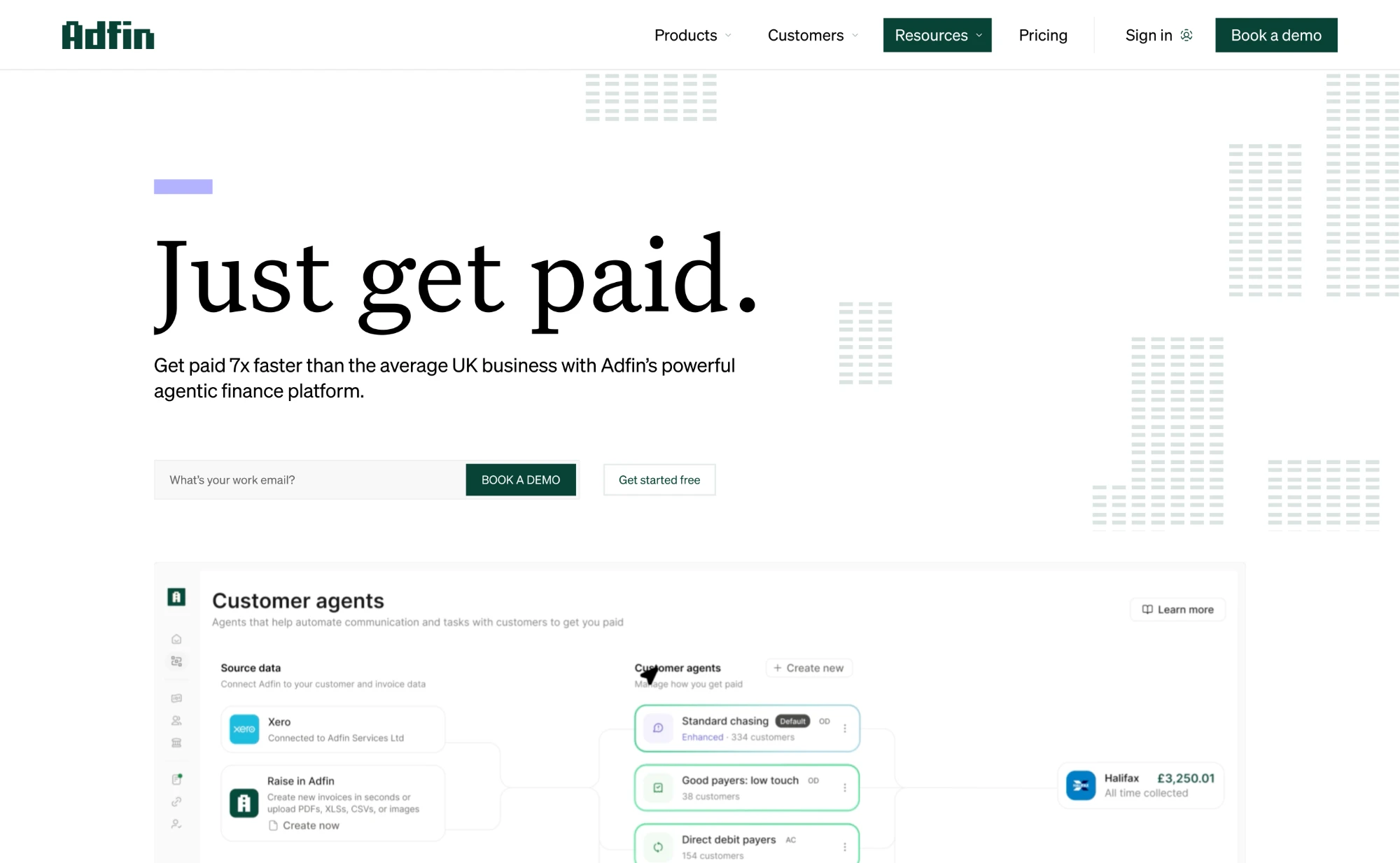
Adfin's copy came as Google Docs, page by page, with the founder annotating visual intent. The content plan decided which pages carried the mission, which carried the technical proof, and which micro-details (like free retries) belonged on feature pages where they drive conversion.

- To launch
- 8 weeks
- Unique page designs
- ~30
What's included
Content strategy produces page-level content briefs, a proof inventory with the gaps flagged, tone and voice notes, and a content model for the CMS so the blog, case studies and resources have a home from day one. It's part of Discovery.
Outcomes
Copy gets written once, because the plan was agreed before the writing started. And the pages that result answer the buyer's question directly, which is what people and answer engines both reward.